


About TEAM Public Health
“Leadership is getting results in a way that inspires trust.”
… SMR Covey1
Mission
TEAM Public Health is led by Dr. Tomás Aragón
taragonmd@gmail.com | Curriculum vitae | Buy me a coffee
Our mission is to improve the human capabilities of becoming decisive, learning, healing, and impactful leaders and teams in a disruptive world.
About Tomás
Founder of TEAMPublicHealth.substack.com, Adjunct Faculty, and Impact Fellow at the UC Berkeley School of Public Health. Served in governmental public health for 29 years (State Public Health Officer and Director, California Department of Public Health, and Health Officer and Director, Population Health Division, San Francisco Department of Public Health). As a local and state health officer, exercised leadership and legal authority to protect health, promote well-being, and prevent disease and injury, especially during the COVID-19 pandemic. As CDPH director, led the largest state health department on its journey to becoming a learning, healing, and impactful organization. Striving to embody and promote the universal values of dignity, equity, compassion, and belonging, worked to transform systems towards a culture of healing and health for all. Supports community efforts to protect and promote mental, emotional, behavioral, and social health. Studies Decision Intelligence 4 Health to improve team decision making under constraints (information, values, time, resources). For scientific computing and decision modeling, promotes Julia, Python, and R (see di4health.github.io).
About TEAM Public Health
TEAM Public Health focuses on the practical public health leadership and management team skills to become decisive, learning, healing, and impactful leaders, teams, and organizations (Figure 1). Teams are the unit of discovery, discussion, and decisions.
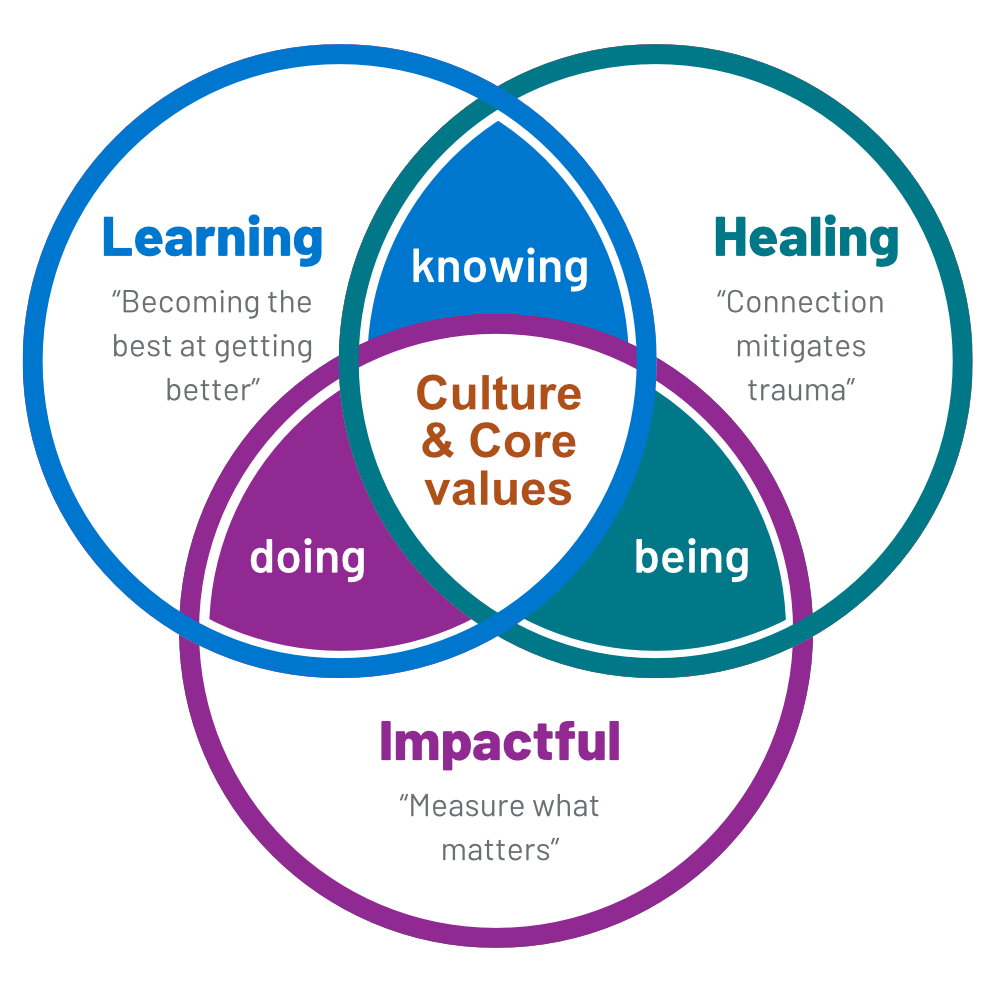
There are many great blogs/newsletters that focus on events of the day.2 This blog will focus on insights, concepts, methods, and practices that are always relevant and applicable today and in the future.
At the end of the day, we want
to learn and get better,
to prevent harm and promote healing, and
to make a difference and have impact.
Core values
Why “TEAM” in TEAM Public Health.
TEAM is an acronym for
T = Trust building and Trauma mitigation
A = Appreciative Inquiry and Alliance building
These values support our mission and theory of change.
Team-centered theory of change
This blog focuses on becoming learning, healing, and impactful public health teams and organizations. Teams are the basic unit of getting things done. A team is a collection of individuals, and an organization is a collection of teams. The team skills you learn when you are at the lower levels of an organization are applicable, relevant, and much more impactful as you rise in the organization. This may not be obvious.
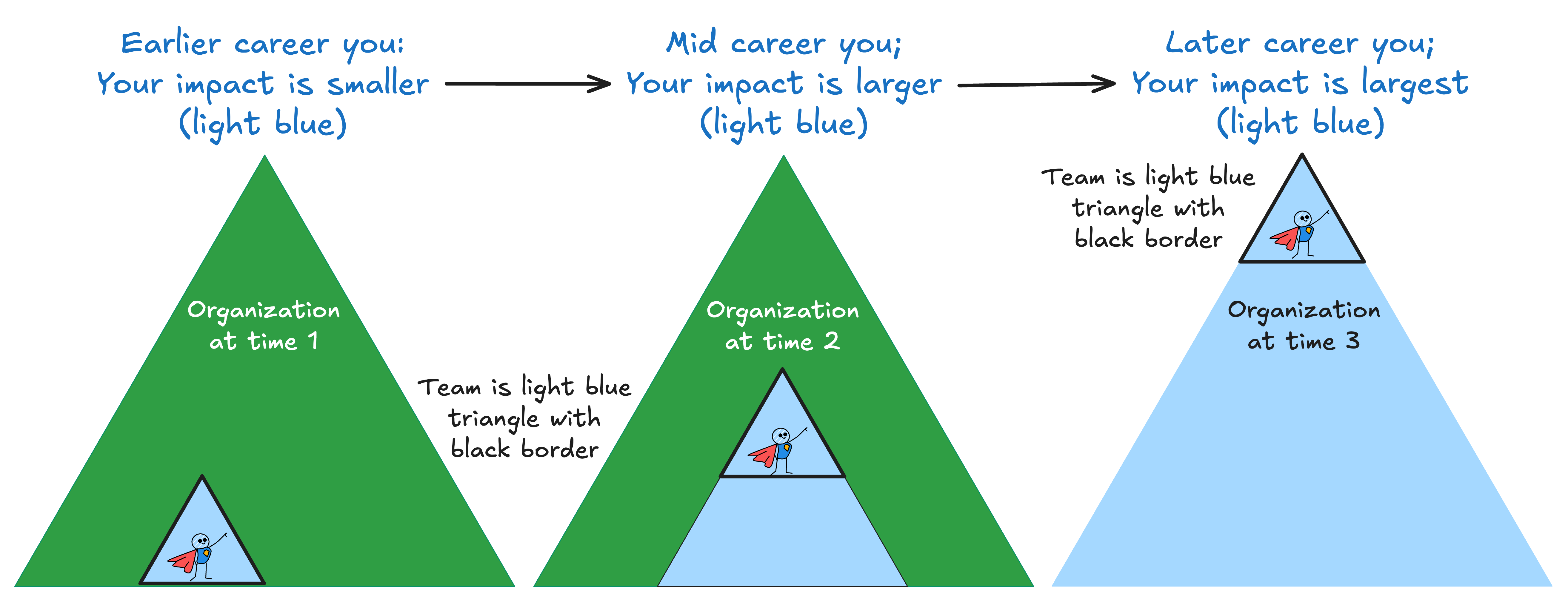
Figure 2 depicts your early career influence and impact (light blue) as you deploy the team skills you learned during your time at the bottom of an organization. As you climb the organization hierarchy (to the top of red pyramid) the same team skills you learned earlier in your career grow in influence and impact (light blue).
The bottom line is that improving your team skills has a big payoff immediately and, for the same level of skill, has a much bigger payoff later in your career. So focusing on building your team skills (decision making, learning, healing, being impactful, trust building, etc.) is absolutely worth your effort.
Teams are the basic unit of getting things done. A team is a collection of individuals, and an organization is a collection of teams. The team skills you learn when you are at the lower levels of an organization are applicable, relevant, and much more impactful as you rise in the organization.
Another way of appreciating the importance of team skills is with the Networked Talent Model (NTM). Figure 3 depicts the four NTM competency domains that are essential to short and long-term career success. Formal education, training, and practice is a key path to occupational mastery (eg, data science). Management is getting things done (eg, project management). Leadership is leading change by inspiring and influencing others to commit, align, and act towards a shared vision. Management tasks can be delegated. Leadership is about relationships and influence; it cannot be delegated. Team skills are the complex interpersonal skills necessary to be an effective team member and leader.
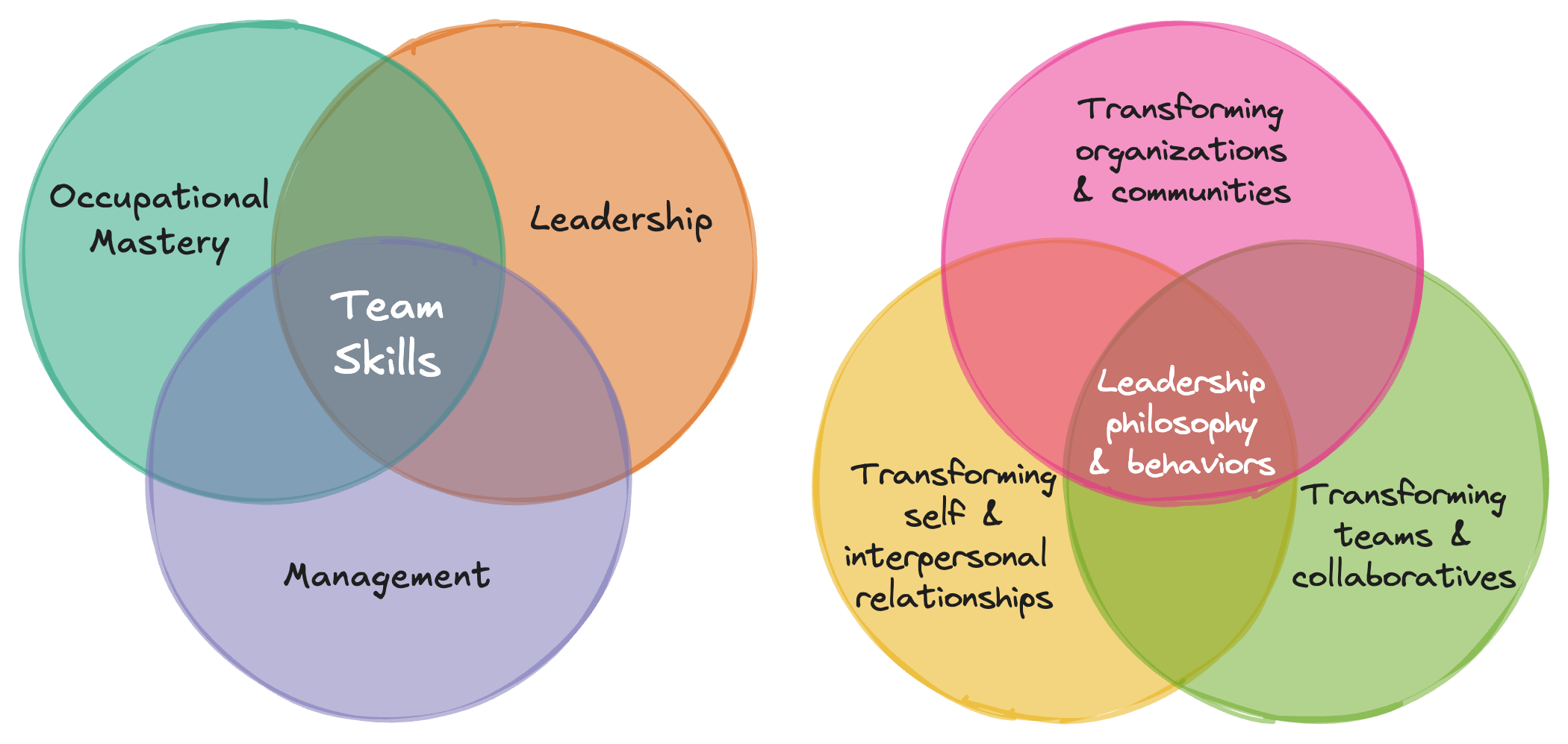
Figure 3 also displays the Organization Transformation Model (OTM). Together, OTM and NTW, make up our theory of change. They are based on our work and experience in public health organization and community practice.
Because of the centrality and universality of team skills, honing your team skills becomes a superpower that only grows with time.
Because of the centrality and universality of team skills, honing your team skills becomes a superpower that only grows with time.
Why a focus on Decision Intelligence 4 Health?
Decisions are our most important daily activity. Decisions are the irrevocable allocation of resources (time, activity, material, money, people) towards a goal. Some resources, like time, are irreversible!
“… there are only two things that determine how your life turns out: luck and the quality of your decisions. You have control over only one of those two things.”
“… your decision-making is the single most important thing you have control over that will help you achieve your goals.”
Annie Duke, How to Decide: Simple Tools for Making Better Choices. Penguin Publishing Group, 2020.
Visit the Decision Intelligence 4 Health page to learn more.
Supporting TEAM Public Health
TEAM Public Health is a FREE — not for profit — blog. All of the content will be freely available to all subscribers. The content is designed to be evergreen.
Share TPH blog postings.
Write a blog posting that fits with the theme of site (I will help you).
Buy me a coffee (one time “tip” for the TPH or blog posting, which can be repeated).
Subscribe (1 coffee monthly, or 1 lunch annually) to support open sourcing all content.
There are multiple ways to support TPH (Table)!
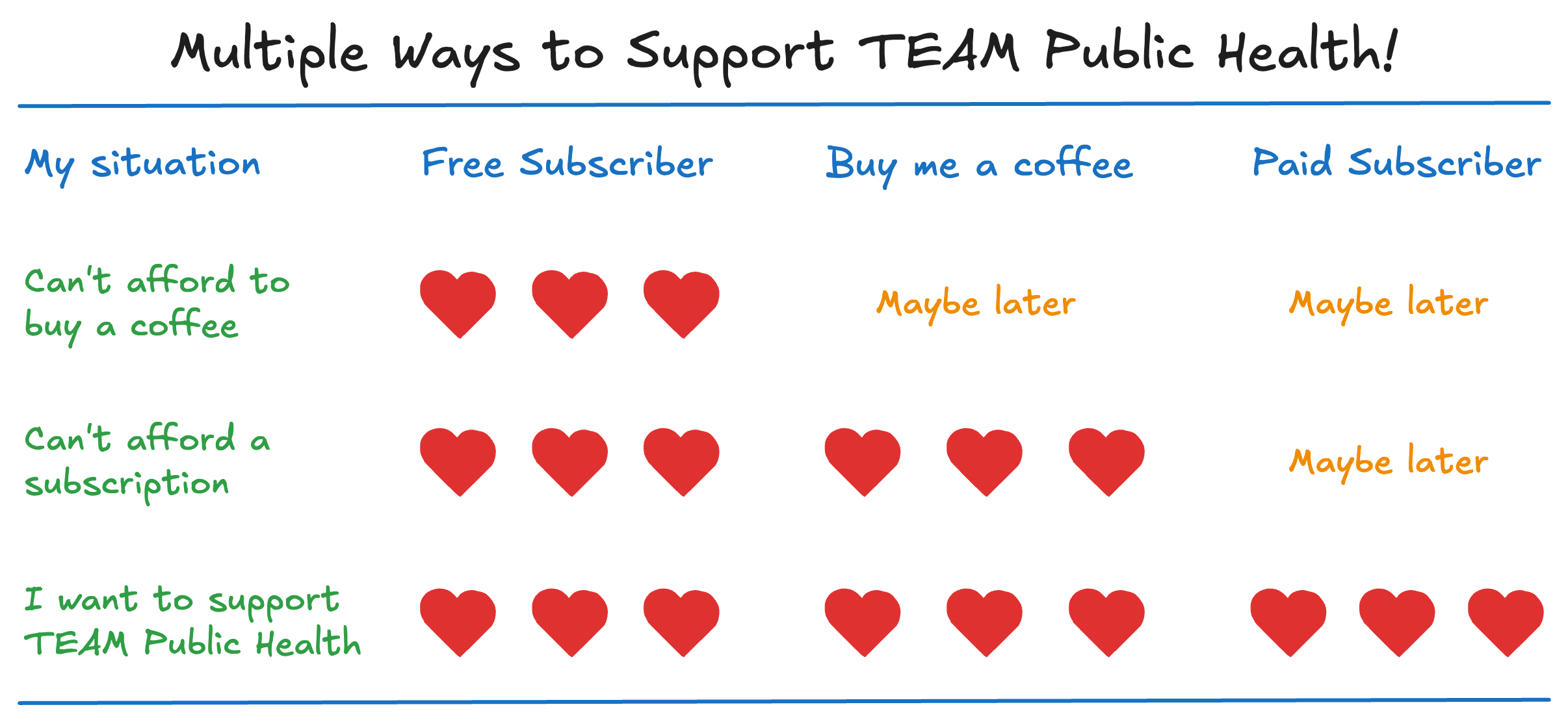

Thanks for supporting TEAM Public Health! Please share.
Serving with you,
Footnotes
Stephen MR Covey and Rebecca R Merrill. The Speed of Trust: The One Thing That Changes Everything. Paperback ed. Free Press, 2008.
See, for example, one of my favorites: Your Local Epidemiologist by Katelyn Jetelina.
Equity 2.0 is promoting belonging *without* othering , bridging *without* breaking, and targeted universalism. To learn more visit The Othering and Belonging Institute at https://belonging.berkeley.edu/.
